
What Conditions Can Lead to Hip Replacement?
Several conditions can cause sufficient joint damage to require hip replacement.
Hip Osteoarthritis
Osteoarthritis progressively damages the cartilage covering the hip joint.
As the disease advances, patients can develop pain, stiffness and restriction of movement.
Avascular Necrosis
Avascular necrosis—also called osteonecrosis—occurs when the blood supply to part of the femoral head becomes compromised.
In advanced stages, the femoral head can collapse and secondary arthritis may develop.
Treatment depends on the stage of the disease. Hip-preserving procedures may be considered in selected earlier cases, while advanced collapse may require total hip replacement.
Hip Dysplasia
An abnormally shallow or poorly developed hip socket can result in abnormal joint loading and premature arthritis.
Hip replacement in patients with dysplasia may require additional planning because the anatomy can differ significantly from a typical arthritic hip.
Post-Traumatic Arthritis
Previous fractures or major injuries around the hip can eventually lead to joint degeneration.
Inflammatory Arthritis
Certain inflammatory diseases can cause progressive destruction of the hip joint.
Do I Need a Hip Replacement?
Not every painful hip requires surgery.
The decision to proceed with hip replacement should be based on the patient's symptoms, physical examination, imaging findings, general health, previous treatment and expected benefit from surgery.
Hip replacement may be considered when patients experience:
- Persistent groin or hip pain
- Significant pain while walking
- Progressive reduction in walking distance
- Difficulty putting on shoes or socks
- Difficulty getting into or out of a car
- Hip stiffness
- Pain at rest or during the night
- Progressive loss of independence
- Advanced joint damage on imaging
- Inadequate improvement with appropriate nonsurgical treatment
The decision should be individualized rather than based on age or an X-ray alone.
Where Is Hip Arthritis Pain Usually Felt?
One important misconception is that hip-joint pain must always be felt on the outside of the hip.
Pain originating from the hip joint is commonly felt in the:
- Groin
- Front of the thigh
- Buttock
- Occasionally the knee
Pain directly over the outer side of the hip can also arise from structures outside the joint.
Similarly, lower-back disorders may produce pain around the hip or leg.
Correctly identifying the source of pain is therefore essential before considering hip replacement.
How Is Hip Arthritis Diagnosed?
Assessment usually includes a detailed history and orthopedic examination.
The examination may evaluate:
- Walking pattern
- Hip range of motion
- Leg length
- Areas of tenderness
- Muscle strength
- Hip deformity
- Knee examination when relevant
- Lower-back and neurological findings when indicated
Appropriate X-rays often provide the most important initial imaging information.
MRI or CT may be required in selected patients depending on the suspected diagnosis and surgical planning requirements.
Can Hip Replacement Be Avoided?
Depending on the underlying condition and stage of disease, treatment before replacement may include:
Activity Modification
Reducing activities that consistently aggravate symptoms while maintaining appropriate movement and exercise.
Physiotherapy
Maintaining muscle strength, movement and function when clinically appropriate.
Weight Management
For appropriate patients, reducing excess body weight can decrease mechanical stress and improve general health before surgery.
Medication
Analgesic or anti-inflammatory medication may be considered according to the patient's medical history.
Injections
Selected patients may benefit temporarily from image-guided intra-articular treatment.
Injections do not reverse advanced structural joint damage.
Hip-Preservation Surgery
In selected conditions and stages, procedures designed to preserve the native hip may be considered.
Once advanced joint destruction or femoral-head collapse has occurred, however, preservation may no longer provide predictable benefit.
What Is Total Hip Replacement?
Total hip replacement—also called total hip arthroplasty—is a surgical procedure in which the damaged surfaces of the hip joint are replaced with prosthetic components.
The arthritic femoral head is replaced by a femoral component with a new head, while the damaged socket is resurfaced with an acetabular component.
The principal goals are to:
- Reduce pain
- Improve mobility
- Restore useful hip movement
- Improve walking
- Improve independence
- Improve quality of life
No artificial joint can reproduce a natural healthy hip perfectly, and expectations should be discussed before surgery.
What Is the Direct Anterior Approach?
There are several established surgical approaches to the hip.
The direct anterior approach accesses the hip from the front and uses an intermuscular and internervous interval.
It has attracted considerable patient interest because of its potential for early functional recovery in appropriately selected patients.
However, the surgical approach is only one element of successful hip replacement.
Patient anatomy, diagnosis, implant positioning, soft-tissue management, surgeon experience and appropriate rehabilitation remain important.
The direct anterior approach is therefore not automatically the best approach for every patient.
What Type of Hip Implant Is Used?
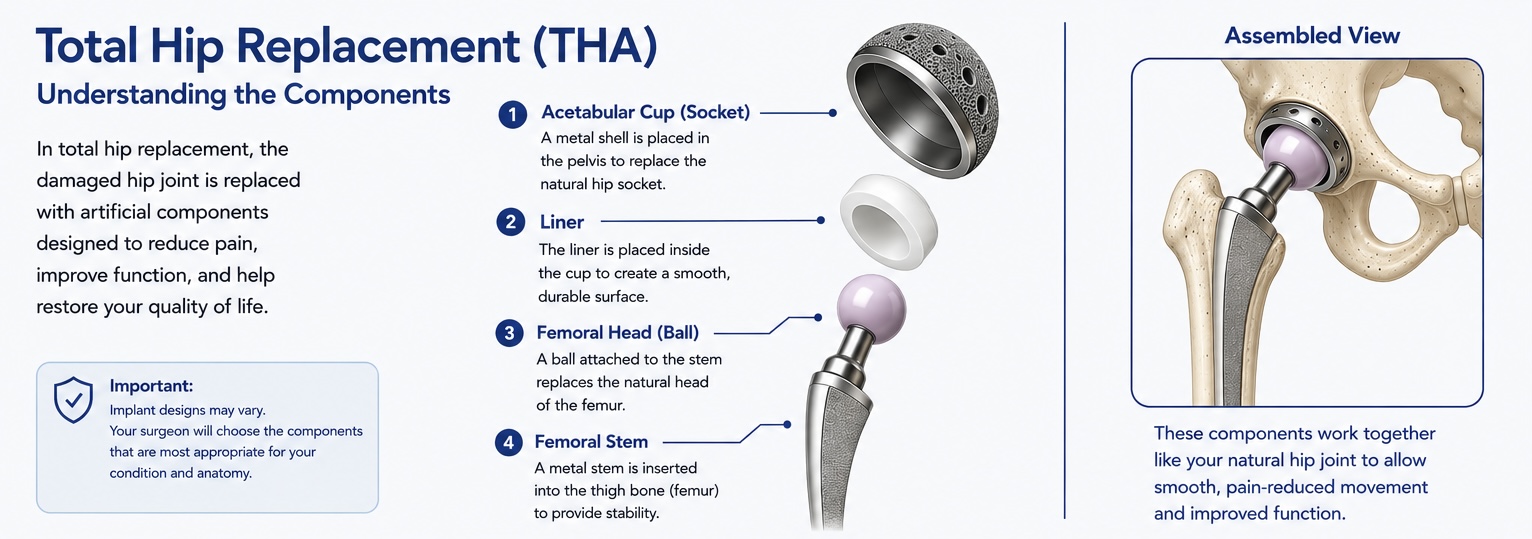
A total hip replacement usually includes:
- Acetabular shell
- Acetabular liner
- Femoral stem
- Femoral head
Selection should consider:
Different designs, sizes, fixation methods and bearing surfaces are available.
- Patient anatomy
- Age
- Bone quality
- Diagnosis
- Previous surgery
- Degree of deformity
- Surgeon experience
- Long-term clinical evidence
The objective is not simply to select a particular brand, but to choose an appropriate reconstruction for the individual patient.
Ceramic, Metal and Polyethylene: What Do They Mean?
Patients frequently encounter terms such as:
- Ceramic-on-ceramic
- Ceramic-on-polyethylene
- Metal-on-polyethylene
These describe the materials forming the bearing surfaces of the artificial hip.
Each bearing combination has characteristics, advantages and limitations.
The appropriate choice depends on the patient and implant system rather than one material being universally superior for everyone.
Cemented or Uncemented Hip Replacement?
Hip components can be fixed to bone using different techniques.
In an uncemented reconstruction, components are designed to achieve initial mechanical stability and subsequent biological bone integration.
Cemented components use bone cement for fixation.
The appropriate method depends on factors such as bone quality, anatomy, age, diagnosis and the component being implanted.
Neither technique should be regarded as universally correct for every patient.
What Happens Before Hip Replacement?
Preparation may include:
- Clinical assessment
- Appropriate hip and pelvic X-rays
- Blood investigations
- Medical assessment
- Cardiac evaluation when indicated
- Review of medications
- Management of anticoagulant therapy when appropriate
- Optimization of diabetes and other medical conditions
- Evaluation for active infection
- Anesthesia assessment
- Surgical planning
Medical optimization is an important part of reducing avoidable perioperative risk.
What Happens During Hip Replacement?
During surgery, the damaged femoral head is removed and the acetabulum is prepared for the socket component.
The femur is then prepared for the femoral component.
The surgeon assesses:
- Component stability
- Hip stability
- Leg length
- Offset
- Range of motion
- Implant position
The exact technique varies according to the surgical approach, anatomy and implant system.
What Happens After Surgery?
When medically and surgically appropriate, modern recovery pathways encourage early mobilization.
Postoperative care may include:
- Multimodal pain control
- Prevention of blood clots
- Early standing and walking
- Physiotherapy
- Wound care
- Progressive activity
- Follow-up examinations
Recovery should be individualized.
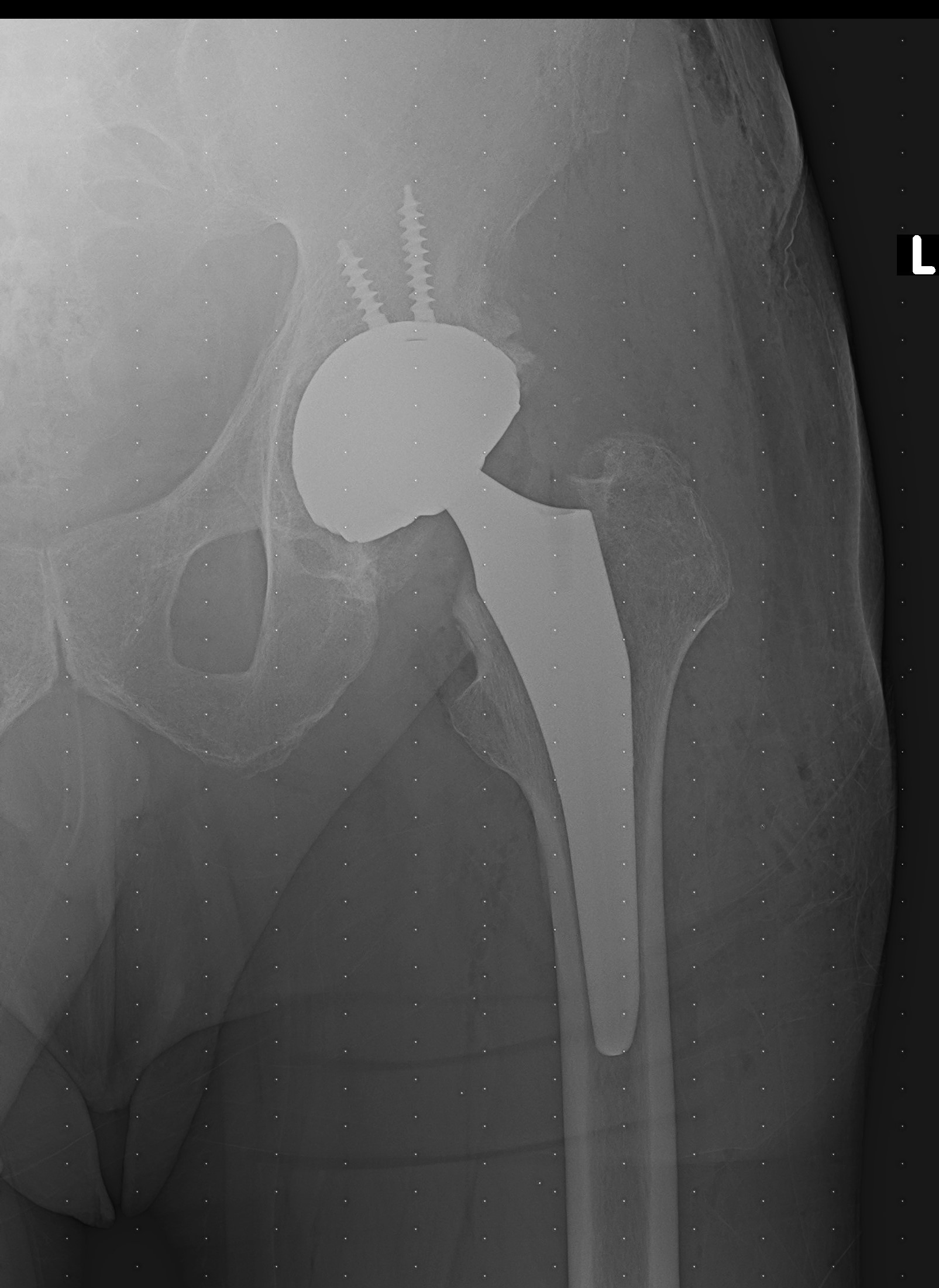
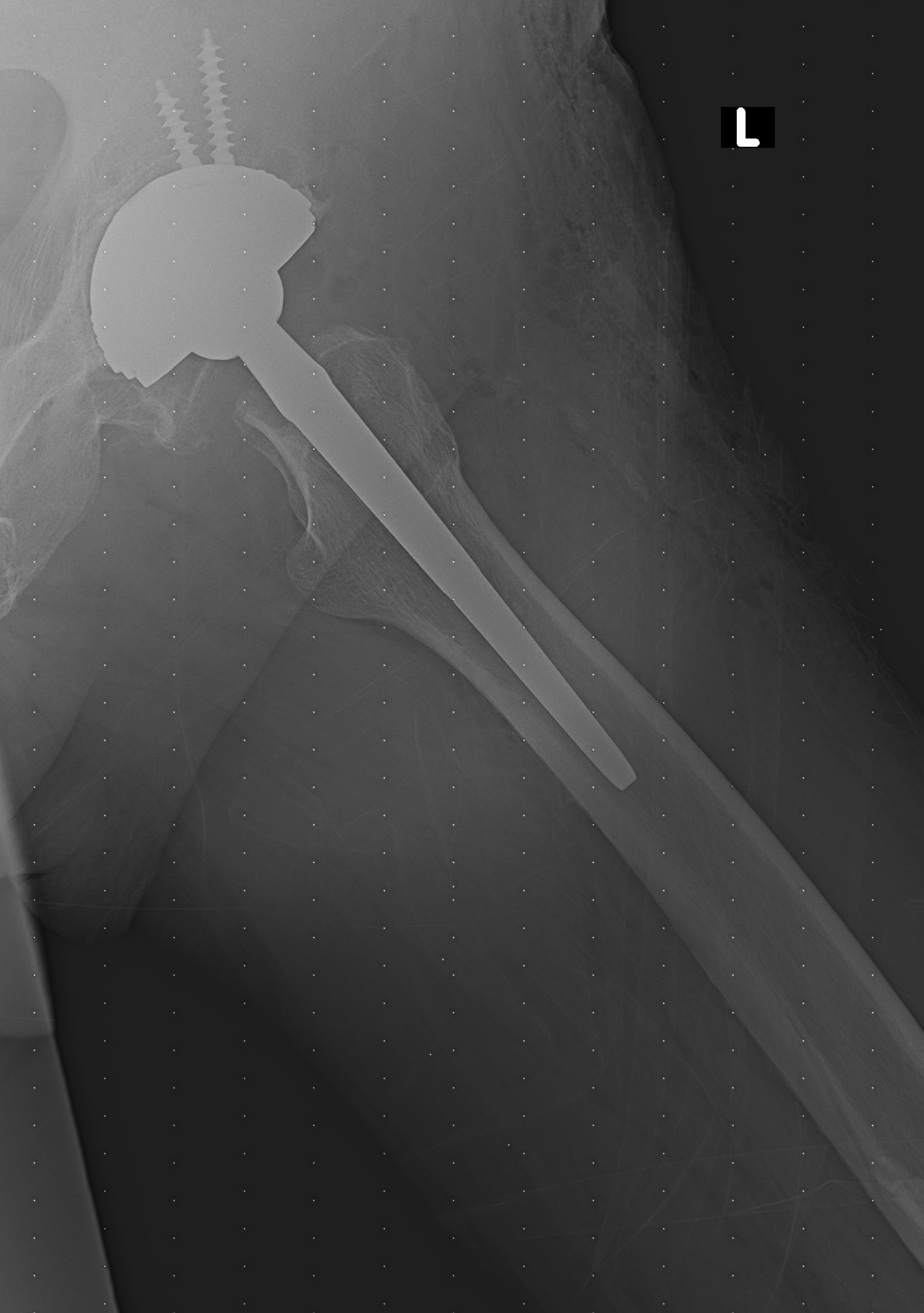
Educational example radiographs. The images alone do not determine treatment or provide individualized medical advice.
The illustration below explains the main components commonly used in total hip replacement. Implant design, materials, fixation, and configuration may vary according to the individual case.
Understanding the Components of a Total Hip Replacement
A total hip replacement replaces the damaged surfaces of the hip joint with artificial components designed to create a stable, functional articulation. The implant design, bearing surfaces, fixation method, and component sizes are selected according to the individual patient and surgical plan.
How Long Does Recovery Take?
Recovery varies substantially between patients.
Some patients achieve basic independence relatively quickly, while improvement in strength, endurance and confidence can continue for several months.
Recovery is influenced by:
- Preoperative mobility
- Muscle strength
- Age
- General health
- Diagnosis
- Surgical complexity
- Other musculoskeletal conditions
- Rehabilitation
- Development of complications
Early improvement should not be confused with complete biological recovery.
How Long Does a Hip Replacement Last?
Modern total hip replacements are designed for long-term function, but no artificial joint can be guaranteed to last for life.
Longevity depends on multiple factors including:
- Implant design
- Bearing surfaces
- Fixation
- Component position
- Patient activity
- Bone quality
- Infection
- Trauma
- Biological factors
The possibility of revision during the patient's lifetime deserves particular consideration in younger individuals.
Risks of Total Hip Replacement
Potential complications include:
- Infection
- Blood clots
- Bleeding
- Wound complications
- Dislocation
- Fracture
- Leg-length difference
- Nerve injury
- Blood-vessel injury
- Implant loosening
- Wear
- Persistent pain
- Medical or anesthetic complications
- Need for further surgery
Individual risk varies, and these issues should be discussed as part of informed consent.
What Is Revision Hip Replacement?
Revision surgery may be required when a previous hip replacement develops a significant problem.
Reasons can include:
- Infection
- Implant loosening
- Recurrent instability or dislocation
- Wear
- Fracture around the implant
- Implant failure
- Bone loss
Revision hip replacement can be considerably more complex than primary surgery.
The first step is therefore to determine why the previous replacement is failing before deciding how it should be treated.
What Should You Consider When Choosing a Hip-Replacement Surgeon?
The decision should be based on the diagnosis, symptoms, examination, imaging findings, general health, previous treatment and expected benefit from surgery.
A consultation should also address reasonable nonsurgical alternatives, the proposed approach and reconstruction, potential risks, rehabilitation and follow-up.
- Relevant orthopedic specialization
- Experience with the specific hip condition and procedure
- Experience with complex or revision cases when relevant
- Individualized approach and implant planning
- A clear rehabilitation and follow-up plan
Am I Too Young for Hip Replacement?
There is no single minimum age. Younger patients require careful consideration of diagnosis, symptoms, activity expectations and the possibility of future revision surgery.
Am I Too Old for Hip Replacement?
Age alone is not an absolute contraindication. General health, expected benefit and individual surgical risk are more important.
Will Both Legs Be Exactly the Same Length?
Restoring appropriate leg length and hip biomechanics is an important surgical objective. However, perfect numerical equality cannot be guaranteed in every case because stability and individual anatomy must also be considered.
When Can I Walk?
Many modern protocols encourage walking early when the patient's medical and surgical condition permits.
When Can I Drive?
Return to driving depends on the operated side, strength, reaction time, medication use and individual recovery.
When Can I Fly?
The timing of air travel depends on wound healing, mobility, medical condition and individual blood-clot risk. Long-distance travel should be discussed with the treating surgeon.
Can I Exercise After Hip Replacement?
Many patients return to regular physical activity after recovery. Appropriate activities depend on individual circumstances and should be discussed during follow-up.
Does the Anterior Approach Mean There Are No Restrictions?
No. Surgical approach can influence postoperative management, but activity recommendations should still be individualized.
What should I consider when choosing a hip-replacement surgeon?
Consider relevant orthopedic specialization, experience with the specific hip condition and procedure, individualized approach and implant planning, discussion of alternatives and risks, and a plan for rehabilitation and follow-up.
Written and medically reviewed by: Dr. Yousef Abuodeh Consultant Orthopedic Surgeon Last medically reviewed: August 31, 2026